A place for me to speak-out. A chance for my soul to seek...
' Had I the heavens' embroidered cloths,
Enwrought with golden and silver light,
The blue, the dim and the dark cloths Of night and light and the half light, I would spread the cloths under your feet;
But I, being poor, have only my dreams;
I have spread my dreams under your feet;
Tread softly because you tread on my dreams '
- William Butler Yeats
Thursday, November 06, 2008
Bhuvan, ISRO's new eye in the sky - ISRO's take on Google
Tuesday, September 09, 2008
Wireless Powering of LEDs via Resonant Inductive Coupling
Tesla's dream coming true..... I never knew we could do that so easily.. It was always trouble for me when i tried that...
The Big Bang and the CERN
Did you know that the matter in your body is billions of years old?
According to most astrophysicists, all the matter found in the universe today -- including the matter in people, plants, animals, the earth, stars, and galaxies -- was created at the very first moment of time, thought to be about 13 billion years ago.
The universe began, scientists believe, with every speck of its energy jammed into a very tiny point. This extremely dense point exploded with unimaginable force, creating matter and propelling it outward to make the billions of galaxies of our vast universe. Astrophysicists dubbed this titanic explosion the Big Bang.
The Big Bang was like no explosion you might witness on earth today. For instance, a hydrogen bomb explosion, whose center registers approximately 100 million degrees Celsius, moves through the air at about 300 meters per second. In contrast, cosmologists believe the Big Bang flung energy in all directions at the speed of light (300,000,000 meters per second, a hundred thousand times faster than the H-bomb) and estimate that the temperature of the entire universe
was 1000 trillion degrees Celsius at just a tiny fraction of a second after the explosion. Even the cores of the hottest stars in today's universe are much cooler than that.
There's another important quality of the Big Bang that makes it unique. While an explosion of a man-made bomb expands through air, the Big Bang did not expand through anything. That's because there was no space to expand through at the beginning of time. Rather, physicists believe the Big Bang created and stretched space itself, expanding the universe.
A Cooling, Expanding Universe
For a brief moment after the Big Bang, the immense heat created conditions unlike any conditions astrophysicists see in the universe today. While planets and stars today are composed of atoms of elements like hydrogen and silicon, scientists believe the universe back then was too hot for anything other than the most fundamental particles -- such as quarks and photons.
But as the universe quickly expanded, the energy of the Big Bang became more and more "diluted" in space, causing the universe to cool. Popping open a beer bottle results in a roughly similar cooling, expanding effect: gas, once confined in the bottle, spreads into the air, and the temperature of the beer drops.
Rapid cooling allowed for matter as we know it to form in the universe, although physicists are still trying to figure out exactly how this happened. About one ten-thousandth of a second after the Big Bang, protons and neutrons formed, and within a few minutes these particles stuck together to form atomic nuclei, mostly hydrogen and helium. Hundreds of thousands of years later, electrons stuck to the nuclei to make complete atoms.
About a billion years after the Big Bang, gravity caused these atoms to gather in huge clouds of gas, forming collections of stars known as galaxies. Gravity is the force that pulls any objects with mass towards one another -- the same force, for example, that causes a ball thrown in the air to fall to the earth.
Where do planets like earth come from? Over billions of years, stars "cook" hydrogen and helium atoms in their hot cores to make heavier elements like carbon and oxygen. Large stars explode over time, blasting these elements into space. This matter then condenses into the stars, planets, and satellites that make up solar systems like our own.
How do we know the Big Bang happened?
Astrophysicists have uncovered a great deal of compelling evidence over the past hundred years to support the Big Bang theory. Among this evidence is the observation that the universe is expanding. By looking at light emitted by distant galaxies, scientists have found that these galaxies are rapidly moving away from our galaxy, the Milky Way. An explosion like the Big Bang, which sent matter flying outward from a point, explains this observation.
Another critical discovery was the observation of low levels of microwaves throughout space. Astronomers believe these microwaves, whose temperature is about -270 degrees Celsius, are the remnants of the extremely high-temperature radiation produced by the Big Bang.
Interestingly, astronomers can get an idea of how hot the universe used to be by looking at very distant clouds of gas through high-power telescopes. Because light from these clouds can take billions of years to reach our telescopes, we see such bodies as they appeared eons ago. Lo and behold, these ancient clouds of gas seem to be hotter than younger clouds.
Scientists have also been able to uphold the Big Bang theory by measuring the relative amounts of different elements in the universe. They've found that the universe contains about 74 percent hydrogen and 26 percent helium by mass, the two lightest elements. All the other heavier elements -- including elements common on earth, such as carbon and oxygen -- make up just a tiny trace of all matter.
So how does this prove anything about the Big Bang? Scientists have shown, using theoretical calculations, that these abundances could only have been made in a universe that began in a very hot, dense state, and then quickly cooled and expanded. This is exactly the kind of universe that the Big Bang theory predicts.
CERN and the Big Bang
How do experiments at CERN improve our understanding of the early universe? Click the photo above to hear Dr. Alvaro De Rujula explain. You will need the RealPlayer in order to view this video.
In the first few minutes after the Big Bang, the universe was far hotter -- billions of billions of billions of degrees hotter -- than anywhere in the universe today. This heat gave particles of matter in the early universe an extraordinary amount of energy, causing them to behave in a much different way from particles in the universe today. For example, particles moved much faster back then and collided into one another with much greater energy.
If these conditions do not exist anymore, how do scientists study the behavior of matter in the early universe? One of the most powerful tools for such analysis is the particle accelerator. This device allows physicists to recreate conditions just after the Big Bang by making a beam of fast-moving particles and bringing them together in very high-energy collisions.
Researchers at CERN are using an accelerator called the Large Hadron Collider (LHC) to accelerate subatomic particles called protons to close to the speed of light. This is how fast scientists believed these particles moved in the instants after the Big Bang. By looking at the behavior of these protons, CERN physicists hope to better understand how the Big Bang created the universe.
photo: CERN
When completed in 2005, the Large Hadron Collider at CERN will provide new insight into the past, present and future of our universe.
What is the fate of the universe?
The Big Bang theory raises some important questions about the fundamental nature of the universe: Will the expansion of the universe, set in action by the Big Bang, continue forever? Or will gravity stop the expansion and eventually cause all the matter in the universe to contract in a Big Crunch?
Scientists don't yet know the answers to these questions for certain. But particle physics experiments like the accelerator studies at CERN may offer some clues down the road. By probing into what matter is made of and how it behaves, such experiments can help us explore what the matter in our universe--the planets, stars, and galaxies--might be doing billions of years from now.
Courtesy: Exploratorium
Wednesday, September 03, 2008
Manjul Bhargava - Youngest Prof At US Varsity
MUMBAI: It doesn’t take rocket science to figure out that you have a professional hiker by your side.
But when the gentleman you walk with - along the unending stretches at IIT Bombay, Powai - tells you that he arrives at the best solutions to complex mathematical theories while hiking, it makes you pause and wonder.
At 33, Manjul Bhargava is a whiz at maths, music and hiking. And he’s the youngest professor at Princeton University, US. When most people are still learning to navigate the rough and tumble of the workplace, Bhargava had hotfooted it to where he is now.
He did his PhD in number theory at Princeton - he cracked a 200-year-old problem - under his mentor, Andrew Viles. And was named professor at the tender age of 28. “It was weird. I started teaching when I was an undergraduate. And when I went into it full time, I was suddenly flooded with offers from different colleges for various posts.”
Why Princeton? “They had the best offer,” he grins.
But - er - math? A subject that intimidates so many of us mere mortals? To become a reasearcher in that subject, teach it, win prizes and be in love with it is, well, no less than a feat. “Maths is fun. It is a creative process. I always knew I had an inclination for maths. So going into research in the subject was natural for me.”
He believes in the huge potential for the subject in India, and will be teaching at IIT Powai and TIFR in Mumbai for about a month each year.
Bhargava is in India in connection with a string theory conference at TIFR. He also gave a lecture at IIT-B and is working on starting a music programme here. He is an adjunct professor at Princeton and IIT-B, and tries to visit once or twice a year.
“Maths is all about creativity. It’s an art... There is something about Indians that makes them good at maths. It’s either cultural or genetic.” Genetic, maybe. But cultural? “For generations, we have produced great mathematicians. Maybe it’s because of that,” he believes. And, of course, the obsessive importance attached to engineering in the country. “When you’re good at maths, you are immediately pushed towards engineering for economic reasons. Because for a long time, engineers were the ones who grabbed the good jobs.”
However, he feels, things are changing now in favour of pure sciences. “There are a lot more research jobs available. With so many institutes starting up, all the new IITs, they are going to need a lot more faculty.”
But most students dread the M word. That is one exam they will gladly pass up the chance to write. “That is true,” he says. “Sadly, in India, we tend to teach maths according to a structure. Students learn formulae by rote. Teachers should teach maths just like other subjects. Explain a theory, ask students to try and find answers and then guide them in the right direction,” he says.
Another problem, he points out, is that if you are good at any of the sciences, you are expected to choose engineering. “But that’s not the way it works. Someone who excels in maths need not be that good at chemistry or physics. Everyone has a knack for some subject. He or she should be encouraged to concentrate on that subject.”
The levels of teaching the subject here are way ahead of those in the US, he says. “As a child, I used to come down to India for months together. I used to look at textbooks here and wonder. Because the level of maths taught here is way above what their American contemporaries learn at that age.”
Bhargava counts number theory and tabla sessions among his passions. Just like the problems he solves on hikes. He seems pretty much at home walking these roads and talking about his life. Does he do it often? “Oh yes, I do. There are times when I am stuck on a theory and all I need is a long walk in the woods to arrive at a solution. I even take my students on hikes sometimes to explain or work out a theory.”
Maths is, of course, in his blood. His mother too is a mathematics professor. But his horizons have always been broader. “I always knew I was inclined towards maths. At graduation, I took a lot of classes. Even though my core subject was maths, I took credits in Sanksrit, paleontology and economics. Then I started taking classes during my undergrad years and things just kind of fell into place,” he says.
Would he consider moving to India, to share his love for maths? And where would he pitch tent? The answer’s simple. “Mumbai, definitely. It’s where maths and music come together for me,” he says.
Tuesday, July 01, 2008
Einstein’s Energy Bar is “Relatively Delicious!”
Einstein’s Energy Bar claims to be “Relatively Delicious!”. It also notes that the real meaning of e=mc^2 is; Energy equals Mouth watering Chocolatey goodness, squared. Other than chocolate I have no clue what else is in one of these bars.
Thursday, June 12, 2008
UFOs (Flying Saucers) - How They Fly
Tuesday, June 10, 2008
Intel® 2008 Awards: Teen Winners Make Amazing Contributions To Their Fields!
1. Sana Raoof (left) contributed mathematics research that assists in solving classic biochemistry problems.
Raoof's research provided new insight into how a better understanding of mathematical knot theory could help resolve classic biochemical problems. Specifically, her work focused on the Alexander-Conway polynomial invariant for chord diagrams to help prove how to classify molecules on a structural basis.
Sana Raoof, 17, is from Muttontown, NY.
2. Yi-Han Su (center) identified a way to make methanol convert to hydrogen with greater efficiency.
Su was awarded for her efforts to identify a high-activity catalyst that could improve methanol reforming reactions in order to generate hydrogen more efficiently.
Yi-Han Su, 17, is from Chinese Tapei.
3. Natalie Sarange Omattage developed a biosensor to screen for contamination in foods.
Omattage developed a more efficient and less expensive way to screen for food additive contaminants, including those responsible for the recent deaths of many pets. By developing biosensors based on quartz crystal microbalance (QCM), Omattage's research provides a new way for ports and warehouses to more thoroughly screen for food additives and other contaminants that could be found in food imported into the United States.
Natalie Sarange Omattage, 17, is from Cleveland, MS
Wow! It's hard to believe that these women are still in high-school and I'm reporting the winners of the ISEF and not of the Nobel Prize!
Congratulations to Raoof, Su, and Omattage for your accomplishments and thank you for setting the bar high for teens who aspire to the ISEF. There were 500 other ISEF winners in grade school, middle school, and high school categories; congratulations to you all!
Wednesday, May 07, 2008
Nanoclusters break superconductivity record
Wow! Every now and again a paper on the arxiv leaps out at you and today there’s work from Indiana University in Bloomington that has got my eyeballs on stalks.
Get this: a team led by Martin Jarrold is claiming to have found evidence of superconductivity in aluminium nanoclusters at 200 K .
Yep, 200 K. The current world record for high temperature superconductivity is 138 K for a cuprate perovskite so that’s a massive jump.
The background to this is that two years ago Yuri Ovchinnikov at the Landau Institute for Theoretical Physics in Moscow and Vladimir Kresin at the Lawrence Berkeley Laboratory in California predicted that metal nanoclusters with exactly the right number of delocalised electrons (a few hundred or so) could become strong superconductors.
Now Jarrold and his buddies (Kresin and Ovchinnikov among them) have found the first evidence that this prediction is correct in individual aluminium nanoclusters containing 45 or 47 atoms . And they found it at 200 K.
A few caveats. Before a claim of superconductivity can be made, physicists require three unambiguous and repeatable lines of evidence. The first is obviously zero electrical resistance. The second is the Meisner effect in which the superconductor reflects an external magnetic field. And finally there must be evidence of a superconducting phase transition, such as a jump in the material’s heat capacity when superconductivity occurs.
What Jarrold’s team have measured is the last effect–a massive change in an individual nanocluster’s heat capacity at 200 K. That’s an important pillar of evidence which is consistent with superconductivity but it is not yet a slam dunk.
Jarrold and his team are simply time-stamping their efforts by publishing on the arxiv and you can bet your bottom dollar that they’re looking for other evidence right now.
Even with that proviso, this looks to be an important breakthrough which should be straightforward for other groups to replicate. The group’s work is not yet peer-reviewed. That’ll be an important step too.
Jarrold will be only too mindful that the field of high temperature superconductivity is littered with the corpses of physicists who have made premature claims.
But for the moment, sit back and admire. 200K…wow! That’s room temperature in Siberia at certain times of the year.
Ref: arxiv.org/abs/0804.0824: Evidence for High Tc Superconducting Transitions in Isolated Al45 and Al47 Nanoclusters
Earlier ref: arxiv.org/abs/cond-mat/0603733: Shell Structure and Strengthening of Superconducting Pair Correlation in Nanoclusters
Monday, April 28, 2008
First Superheavy Element Found In Nature
First superheavy element found in nature
The hunt for superheavy elements has focused banging various heavy nuclei together and hoping they’ll stick. In this way, physicists have extended the periodic table by manufacturing elements 111, 112, 114, 116 and 118, albeit for vanishingly small instants. Although none of these elements is particularly long lived, they don’t have progressively shorter lives and this is taken as evidence that islands of nuclear stability exist out there and that someday we’ll find stable superheavy elements.
But if these superheavy nuclei are stable, why don’t we find them already on Earth? Turns out we do; they’ve been here all along. The news today is that a group led by Amnon Marinov at the Hebrew University of Jerusalem has found the first naturally occuring superheavy nuclei by sifting through a large pile of the heavy metal thorium.
What they did was fire one thorium nucleus after another through a mass spectrometer to see how heavy each was. Thorium has an atomic number of 90 and occurs mainly in two isotopes with atomic weights of 230 and 232. All these showed up in the measurements along with a various molecular oxides and hydrides that form for technical reasons.
But something else showed up too. An element with a weight of 292 and an atomic number of around 122. That’s an extraordinary claim and quite rightly the team has been diligent in attempting to exclude alternative explanations such as th epresence of exotic molecules formed from impurities in the thorium sample or from the hydrocarbon in oil used in the vacuum pumping equipment). But these have all been ruled out, say Marinov and his buddies.
What they’re left with is the discovery of the first superheavy element, probably number 122.
What do we know about 122? Marinov and co say it has a half life in excess of 100 million years and occurs with an abundance of between 1 and 10 x10^-12, relative to thorium, which is a fairly common element (about as abundant as lead).
Theorists have mapped out the superheavy periodic table and 122 would be a member of the superheavy actinide group. It even has a name: eka-thorium or unbibium. Welcome to our world!
This may well open the flood gates to other similar discoveries. Uranium is the obvious next place to look for superheavy actinides. I’d bet good money that Marinov and his pals are eyeballing the stuff as I write.
Ref: arxiv.org/abs/0804.3869: Evidence for a Long-lived superheavy Nucleus with Atomic Mass Number A = 292 and Atomic Number Z @ 122 in Natural Th
Sunday, April 20, 2008
Darwins - On the Origin of Species - Audio Exert....
Darwin, C. R. 1859. On the origin of species by means of natural selection, or the preservation of favoured races in the struggle for life. 1st edition, 1st issue. Text Image Text & Image F373 In 21 mp3 files: 1, 2, 3, 4, 5, 6, 7, 8, 9, 10, 11, 12, 13, 14, 15, 16, 17, 18, 19, 20, 21.
Darwin’s theory goes online - AFP
Some 20,000 items contained in around 90,000 images were published on the Internet, according to a spokesman for Cambridge University, the scholar’s old academic home.
Chief among them was the first draft of Darwin’s "The Origin of Species", produced in the 1840s, which eventually led to the publication of his most well-known work in 1859.
"This release makes his private papers, mountains of notes, experiments and research behind his world-changing publications available to the world for free," said John van Wyhe, the director of The Complete Work of Charles Darwin Online project.
"The release of his papers online marks a revolution in the public’s access to - and hopefully appreciation of - one of the most important collections of primary materials in the history of science," he added, describing the collection as a "treasure trove".
Along with "The Origin of Species" and other scientific papers, the collection includes photographs of him and his family, reviews of his books, newspaper clippings, as well as material revealing his home life, notably a recipe for boiling rice, inscribed in Darwin’s own handwriting.
Among the scientific papers available are notes from his famous voyage on the HMS Beagle, a five-year journey which started in 1831 and took Darwin to South America and Australia, where he collected huge numbers of samples of fossils and living organisms.
It provided the basis for much of his future work and brought him success and celebrity on his return to Britain.
Darwin produced evidence to show that mankind originated through evolutionary change effected by natural selection and his findings are now considered central to our understanding of biology.
The collection can be found at http://darwin-online.org.uk/.
Friday, April 18, 2008
Father of Chaos Theory, Edward Lorenz, Dies
Edward Lorenz, a long-time MIT meteorologist, died in his home in Cambridge, Massachusetts today. He was 90.
Lorenz is famous for having introduced the world to chaos theory, which holds that small differences in the initial conditions of a system can have outsized impacts on its functioning, a phenomenon sometimes called the "butterfly effect."
The AP has an obituary out by veteran science writer Seth Borenstein.
Friday, April 04, 2008
Indian origin US scientist sees Tumors deep inside the body
Sanjiv Sam Gambhir, the team leader of researchers and the professor of Radiology in Stanford University school of Medicine have developed a new technique that can magnify the tiny diminutive tumors by 1,000 times molecules deep inside the human body, which has paved the way for more efficiently cancer surgery.
According to Sanjiv, “Raman spectroscopy expands the available toolbox for the field of molecular imaging.” “This is an entirely new way of imaging living subjects, not based on anything previously used.”
Illustrating the Raman effect, the lead researcher Gambhir said that signals from Raman spectroscopy were stronger and longer-lived than other available methods, and the type of particles used in this method could transmit information about multiple types of molecular targets simultaneously.
Generally scientist can measure one or two things at a time from the current available techniques, but “With this, we can now likely see 10, 20, 30 things at once,” said Gambhir.
The researchers team of Stanford University School of Medicine had tested the system on mice through injecting them with various engineered Raman nanoparticles and then analysed the anesthetized mice under a special microscope where they were exposed to laser light.
The Scientist found that there were several nanoparticles tagged with the different pieces of proteins probing towards different tumor molecules.
Describing about the ‘Raman Effect’ Sam cited that Stanford researchers team has utilised this technique in the innovative way in which the light (laser) hits the object, roughly one in 10 million photons bouncing off the object’s molecules with an increase or decrease in energy is known as Raman scattering. This sort of scattering pattern is unique to each type of molecule and can be measured scientifically, which is also called as spectral fingerprint.
Gambhir has elaborated that this techniques has been developed from currently popular Positron Emission Tomography (PET) techniques that was discovered 20 or 30 years ago but could not be used in this field. Nowadays, PET has become a routine hospital imaging technique that uses radioactive molecules to generate a three-dimensional image of body biochemistry.
“Nobody understood the impact of PET then,” said Sanjiv while “Ten or fifteen years from now, people should appreciate the impact of this.” he indicated the relevance of this technique.
Postdoctoral scholars Shay Keren, Cristina Zavaleta, Zhen Cheng, Adam de la Zerda, and Oliver Gheysens were among the team of Dr. Sanjiv for founding the way to make Raman spectroscopy a medical tool. The research has been published on March 31, 2008 in an advance online issue of the “Proceedings of the National Academy of Sciences” and funded by National Institutes for Health and Center for Cancer Nanotechnology Excellence.
Sources: Press Release of Stanford University, School of Medicine. For more information do visit http://med.stanford.edu/
Thursday, April 03, 2008
David Hoffman: Catch Sputnik mania!
Filmmaker David Hoffman shares footage from his feature-length documentary Sputnik Mania, which shows how the Soviet Union's launch of Sputnik in 1957 led to both the space race and the arms race -- and jump-started science and math education around the world.
The rocket that launched Sputnik-1, the R-7, was primarily developed as an ICBM. Surrounded by NATO bomber bases, the USSR decided in the early 1950s that it must have the capability of delivering a thermonuclear warhead to the American mainland. The R-7 had a range of 8000 km and carried the "Object-G" warhead weighing 5.4 tons with an explosive yield of 3.5 megatons. Due to problems with reentry systems, the first successful warhead delivery to their test range was not until March 1958, some months after Sputnik. So I am not sure I would characterize the reaction to the R-7 as just a propaganda shock . Missiles and atomic weapons were all too real.
Wednesday, April 02, 2008
Calling All Mad Scientists - to stop Global Warming...
In the summer of 1858, a putrid odor of raw sewage arose from the River Thames in London and choked the city in its sickly grip. The Great Stink, as it came to be known, spurred Britain's lawmakers to rush a bill through Parliament to provide the money to build a modern sewer system -- one that would discharge sewage downstream from the river's drinking water intake. Construction of similar structures in the same era in a number of European and American cities, including Paris and Chicago, ended epidemics of typhoid and cholera, which victims contracted by drinking water contaminated with feces. If the Victorians could eliminate these diseases through careful disposal of human waste, why can't we counter climate change by extracting carbon dioxide from the atmosphere and burying it where it can do us no harm?
That radical proposal lies at the core of Fixing Climate, the latest in a spate of books on the seemingly intractable problem of global warming. While most writers stress the need to cut greenhouse gas emissions, the authors of Fixing Climate -- Columbia University earth scientist Wallace Broecker and the science writer Robert Kunzig -- suggest instead that we view carbon dioxide as a form of sewage: a pollutant with which we have carelessly contaminated the atmosphere, but one that we can remove with the right technology. Doing so is necessary, they argue, because the chance that we will succeed in paring back our carbon emissions with the speed required to avert disaster is quite small.
Broecker and Kunzig embrace a techno-fix that would require us to scrub our carbon dioxide waste from the atmosphere and sock it away in rocks. Their proposal is typically American: upbeat in its can-do spirit, yet pragmatic. The pair are not breast-beating penitents. In fact, they open their book with an eloquent ode to the beauty of the piston engine, acknowledging that fossil fuels have enabled the average American to live as well as a preindustrial king. Yet it's time to shovel away the scum. "We need to create the means for taking our carbon back out of the air and putting it underground, where it came from," they write.
If anyone should be taken seriously on the topic of climate change, it is Wallace Broecker, who has spent more than 50 years studying the climate of the past 200,000 years, and who was one of the first to warn, more than three decades ago, of the dangers of global warming. Born in 1931 ("the same year as Twinkies," the book points out), he arrived in 1952 at what is now Columbia University's Lamont-Doherty Earth Observatory in Palisades, New York. He has spent his entire career there, publishing more than 400 papers and winning numerous prizes, including the National Medal of Science. Over the years, Broecker has developed ways to calculate the rate of gas exchange between the atmosphere and the ocean -- in particular, oceanic uptake of carbon dioxide -- and devised what is known as Broecker's Conveyor Belt, a global scheme of ocean circulation that is thought to drive climate patterns the world over.
As background to their proposal, Broecker and Kunzig devote about a third of their book to explaining the complex history of climate change science; a laudable effort, though at times my eyelids did begin to droop. To their credit, they enliven the text with asides on the notable figures who first figured out the science at hand (among them the Swedish physicist Svante Arrhenius, whose "ravishing young wife, Sophia" deserted him in 1894 after a year of marriage in the midst of his calculations on planet-warming carbon dioxide).
The book's real focus, though, is a climate fix hatched by Klaus Lackner, now a physicist at the Earth Institute at Columbia University. Lackner's company, Global Research Technologies, announced in the spring of 2007 that it had built a prototype "air-capture technology product" to suck CO2 out of the atmosphere. When Broecker first heard Lackner talking about his ideas in 1999, he recalled thinking, "This guy is nuts." Lackner, then an associate director of Los Alamos National Laboratory, argued that we should attempt to accelerate the natural chemical breakdown of rocks. The plan: grind up billions of tons of magnesium- or calcium-rich rocks, chemically combine them with carbon dioxide to form another type of rock -- a harmless carbonate -- and then find a place to put the resulting mountains of the stuff. Later on, Broecker found Lackner's tendency to think big-and his willingness to attack a problem from first principles -- "more exciting than crazy," and lured him to Columbia.
In fact, there is nothing all that revolutionary about pulling carbon dioxide out of the air; it is done on every space shuttle and submarine to prevent crews from asphyxiating on their own exhaled breath. Lackner built his prototype on a budget of $5 million from the late Gary Comer, the founder of Lands' End. In this device, crushed rocks have been replaced by a plastic compound that reacts with CO2 to form sodium bicarbonate: essentially, baking soda. If Lackner's vision comes to fruition, 20-foot-tall carbon-sucking towers-each resembling an erect Tower of Pisa-could be arrayed all over the planet. The final step in this massive cleanup project would be to extract CO2 from the bicarbonate and inject it into the ground in liquid form.
Each tower would extract about one ton of carbon dioxide a day, so it would take an awful lot of towers to scrub the 80 million tons we emit daily. The sheer scale of the problem dwarfs any single solution, but in Broecker and Kunzig's view, Lackner's invention is "the only hope." Their reasoning is simple: the towers can be placed anywhere -- far easier and more practical than attaching a CO2 scrubber to every car and airplane on the planet. And because CO2 disperses quickly through the entire atmosphere, removing it in one spot helps the whole world.
By contrast, say Broecker and Kunzig, collecting CO2 from the flues of power plants would entail transporting the gas perhaps hundreds of miles to a dumping ground. Nevertheless, this too promises to be an important means for steering us from the path of doom, should we manage to make it happen. In January, the Department of Energy scrapped plans for FutureGen, a coal-fired plant that was to collect and dispose of its own CO2 emissions.
The Norwegian oil company Statoil currently captures CO2 from its drilling operations at the Sleipner natural gas field in the North Sea, and it then injects a million tons of the gas each year under the seabed. There are plenty of other places to put the heat-trapping gas. Iceland, for example, is made entirely of basalt, a volcanic rock rich in calcium silicates, which bind with CO2. This fall, Reykjavik Energy plans to begin pumping carbon dioxide half a mile deep into basalt deposits. Vast banks of basalt also exist elsewhere: in the United States, volcanic rock covers more than 60,000 square miles of Washington, Idaho, and Oregon.
Detractors will inevitably dub such schemes misguided or deluded. Tim Flannery, for one, argues in his 2005 book, The Weather Makers, that the volume of carbon dioxide we create is "so prodigious that it seems impossible for Earth to tuck it away without suffering fatal indigestion." The authors of Fixing Climate are not oblivious to the scale of the problem or the expense of the solution. If we choose Lackner's original proposal, then large mounds of carbonate must be piled or buried somewhere. That would transform the landscape, but so would covering hundreds of square miles with solar panels. "There is no free lunch in solving the CO2 problem," Broecker and Kunzig say.
As for Lackner's current proposal to array carbon-capturing towers across the globe, they admit that it sounds utopian. "If the amount [of CO2] the world produced in a single year were spread over Manhattan, it would rise three-quarters of the way up the Empire State Building. On the other hand, if all the wastewater produced in the United States alone were spread over Manhattan, even the radio antenna on top of the Empire State would be far beneath the waves. Yet somehow in the twentieth century we managed to get our sewage problem under control." With our own Great Stink now threatening to overpower the entire planet, we owe it to ourselves and our descendants to consider the merits of such ambitious technological fixes before we suffocate in our own stifling waste.
Thursday, December 20, 2007
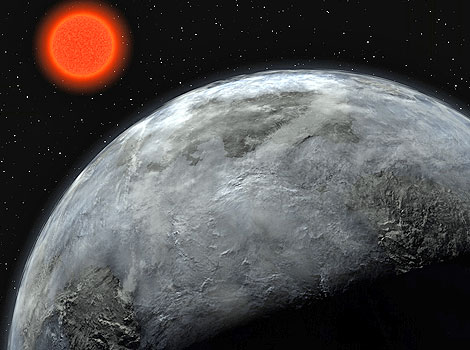
Astronomers find first habitable planet outside solar system

Tuesday, December 18, 2007
Earth in its final century ???
In a taut soliloquy that takes us from the origins of the universe to the last days of a dying sun 6 billion years later, renowned cosmologist Sir Martin Rees explains why the 21st century is a pivotal moment in the history of humanity: the first time in history when we can materially change ourselves and our planet. Stunning imagery of cosmological wonders show us the universe as we know it now. Speaking as “a concerned member of the human race,” Rees harkens to the wisdom of Einstein, calling for scientists to act as moral compasses, confronting the coming developments and ensuring our role in “the immense future.”
Martin Rees, one of the world’s most eminent astronomers, is a professor of cosmology and astrophysics at the University of Cambridge and the UK’s Astronomer Royal. He is one of our key thinkers on the future of humanity in the cosmos.
Martin Rees’ homepage at Cambridge
Monday, December 17, 2007
Robots that are "self-aware": Hod Lipson on TED
Engineer Hod Lipson demonstrates and talks about a few of his cool little robots, which have the ability to learn, understand themselves and even self-replicate. At the root of this uncanny demo is a deep inquiry into the nature of how living beings learn and evolve, and how we might harness these processes to make things that learn and evolve. (Recorded March 2007 in Monterey, California. Duration: 06:29.)
Why you should listen to him: To say that Hod Lipson and his team at Cornell build robots is not completely accurate: They may simply set out a pile of virtual robot parts, devise some rules for assembly, and see what the parts build themselves into. They've created robots that decide for themselves how they want to walk; robots that develop a sense of what they look like; even robots that can, through trial and error, construct other robots just like themselves.
Working across disciplines -- physics, computer science, math, biology and several flavors of engineer -- the team studies techniques for self-assembly and evolution that have great implications for fields such as micro-manufacturing -- allowing tiny pieces to assemble themselves at scales heretofore impossible -- and extreme custom manufacturing (in other words, 3-D printers for the home).
His lab's Outreach page is a funhouse of tools and instructions, including the amazing Golem@Home -- a self-assembling virtual robot who lives in your screensaver.
Saturday, November 10, 2007
Theo Jansen: The mordern day Davinci....

Dutch artist Theo Jansen has been working for 16 years to create sculptures that move on their own in eerily lifelike ways. Each generation of his "Strandbeests" is subject to the forces of evolution, with successful forms moving forward into new designs. Jansen's vision and long-term commitment to his wooden menagerie is as fascinating to observe as the beasts themselves.
His newest creatures walk without assistance on the beaches of Holland, powered by wind, captured by gossamer wings that flap and pump air into old lemonade bottles that in turn power the creatures' many plastic spindly legs. The walking sculptures look alive as they move, each leg articulating in such a way that the body is steady and level. They even incorporate primitive logic gates that are used to reverse the machine's direction if it senses dangerous water or loose sand where it might get stuck.
"A self-styled god, Jansen is evolving an entirely new line of animals: immense multi-legged walking critters designed to roam the Dutch coastline, feeding on gusts of wind."
Wired News
Link to: Theo Jansen's Home Page