Warren Buffet's famous quote is that "It's only when the tide goes out that you learn who's been swimming naked." Over the past few months, the tide has been going out with a vengeance, and we're certainly discovering plenty of folks swimming naked. The latest, of course, is Satyam, the Indian tech company whose CEO admitted that he basically has been making up the company's financial reports for years. It turns out that about $1 billion in cash the company claimed it had... don't actually exist. That's a pretty big problem, because that $1 billion represented about 94% of all the cash the company claimed to have. Oops. It makes you wonder what, exactly, Satyam's auditors have been up to the past few years.
This might explain why the company attempted to do a highly controversial merger deal last month, where Satyam tried to buy construction firms Maytas (Satyam backwards), owned by the sons of Satyam's founders. The deal between companies in two obviously unrelated industries seemed like a pretty clear cash grab for the family -- except most people didn't realize that the cash grab was actually to cover up all the lies on the financial statements.
Of course, there are some amusing side notes to this whole thing. Just a few months ago, for example, Satyam was awarded the "prestigious" Golden Peacock award for (of all things) corporate governance. That award is now being stripped away, but it seems a little late for that. Then, of course, there was the stock analyst who claimed that Satyam was an obvious buy just after the original merger deal fell apart. Considering that the stock dropped 90% today, that seems like an awfully bad call.
Showing posts with label corporate. Show all posts
Showing posts with label corporate. Show all posts
Saturday, January 10, 2009


Time to rethink governance - By TT Ram the IIM Professor in ET
I dont really know why they named their comp. as SATYAM. Contray to their real stature.
Why on earth would they want to do that? Over the past month, bewildered investors
and media analysts have been asking the question of
Satyam’s aborted attempt to use
about Rs 7,000 crore in cash to acquire equity in two property companies.
The lack of synergy between the companies, the conflicts of interest, the issue of valuation — all these were so glaring that it was a mystery why a businessman of the stature of B Ramalinga Raju would have attempted such a move.
Well, it’s all falling into place now.
There was no cash pile waiting to be transferred out. It was a fiction created through some incredibly creative accounting. Revenues, profits, reserves, cash were all cooked up over the years leading to an inflation of the balance sheet by around Rs 7,000 crore.
It was becoming difficult to keep up the fiction. That’s where the proposed investment in the two property companies belonging to Raju’s family came in handy. If Rs 7,000 crore could be shown as having been used to finance the acquisition, the gap at Satyam would cease to exist. Of course, Raju’s sons, who ran the property companies, would have received from Satyam a cheque that was worthless. But that’s all in the family, you know.
This is the merest sketch of a story that has the hallmarks of a thriller. It will take a while for investigators to fill out the details. A whole slew of questions will need to be answered. How did the auditors fail to discern any sign of wrongdoing? How did all of it escape the audit committee? If cash of around Rs 7,000 crore was not there, how was it corroborated by bank statements? And so on.
Investor fury over Satyam’s failed attempt at diversification is now giving way to more universal shock and horror over a scandal that could turn out to be India’s own Enron. Following the terrorist attack in Mumbai last month, the incompetence of politicians was contrasted with the supposedly high standards of performance in corporate India. The Satyam affair has now dealt a severe blow to the pristine image of business in post-reform India. As the economic environment worsens, expect more skeletons to come tumbling out.
Why on earth would they want to do that? Over the past month, bewildered investors
and media analysts have been asking the question of
Satyam’s aborted attempt to use
about Rs 7,000 crore in cash to acquire equity in two property companies.
The lack of synergy between the companies, the conflicts of interest, the issue of valuation — all these were so glaring that it was a mystery why a businessman of the stature of B Ramalinga Raju would have attempted such a move.
Well, it’s all falling into place now.
There was no cash pile waiting to be transferred out. It was a fiction created through some incredibly creative accounting. Revenues, profits, reserves, cash were all cooked up over the years leading to an inflation of the balance sheet by around Rs 7,000 crore.
It was becoming difficult to keep up the fiction. That’s where the proposed investment in the two property companies belonging to Raju’s family came in handy. If Rs 7,000 crore could be shown as having been used to finance the acquisition, the gap at Satyam would cease to exist. Of course, Raju’s sons, who ran the property companies, would have received from Satyam a cheque that was worthless. But that’s all in the family, you know.
This is the merest sketch of a story that has the hallmarks of a thriller. It will take a while for investigators to fill out the details. A whole slew of questions will need to be answered. How did the auditors fail to discern any sign of wrongdoing? How did all of it escape the audit committee? If cash of around Rs 7,000 crore was not there, how was it corroborated by bank statements? And so on.
Investor fury over Satyam’s failed attempt at diversification is now giving way to more universal shock and horror over a scandal that could turn out to be India’s own Enron. Following the terrorist attack in Mumbai last month, the incompetence of politicians was contrasted with the supposedly high standards of performance in corporate India. The Satyam affair has now dealt a severe blow to the pristine image of business in post-reform India. As the economic environment worsens, expect more skeletons to come tumbling out.
Tuesday, October 28, 2008
How to build Google like team
1. Teams size should be less than 5.
2. All leaders no followers.
3. Don’t hire spotless people, Look for spots in the people which matters the most.
4. Punish mediocre success and reward excellent failures.
5. Don’t award TOP 1% and create 99% people unhappy. Award TOP 99% and Fire rest 1%, create 100% happy employees.
6. Freedom to loose = Celebrate failures = Team which looses most wins on creativity.
7. Kill “Lick my ass” kinda managers.
8. Kill project meetings instead go for drink parties and fight over your creative opinion.
9. Don’t work on a project instead own project.
10. Bring design and creativity in all aspect of work.
11. Don’t work when your energies are low as your work requires the best times of the day.
12. Fire managers and buy Leaders.
13. Creativity is driven by stomach so don’t work with empty stomach instead eat best food you love.
14. Don’t earn money earn reputation.
15. First build the product than collect the requirement than do project planning than test it and if it sucks.
Repeat the above cycle.
2. All leaders no followers.
3. Don’t hire spotless people, Look for spots in the people which matters the most.
4. Punish mediocre success and reward excellent failures.
5. Don’t award TOP 1% and create 99% people unhappy. Award TOP 99% and Fire rest 1%, create 100% happy employees.
6. Freedom to loose = Celebrate failures = Team which looses most wins on creativity.
7. Kill “Lick my ass” kinda managers.
8. Kill project meetings instead go for drink parties and fight over your creative opinion.
9. Don’t work on a project instead own project.
10. Bring design and creativity in all aspect of work.
11. Don’t work when your energies are low as your work requires the best times of the day.
12. Fire managers and buy Leaders.
13. Creativity is driven by stomach so don’t work with empty stomach instead eat best food you love.
14. Don’t earn money earn reputation.
15. First build the product than collect the requirement than do project planning than test it and if it sucks.
Repeat the above cycle.
Saturday, August 09, 2008
Corporate Life....
Have you heard the story of “The Washer man and the Foolish Donkey”?
To refresh your memory, and for the benefit of those who have not grown up listening to this moral story, it goes like this…
There was once a washer man who had a donkey and a dog. One night when the whole world was sleeping, a thief broke into the house, the washer man was fast asleep but the donkey and the dog were awake. The dog decided not to bark since the master did not take good care of him and wanted to teach him a lesson. The donkey got worried and said to the dog that if he doesn't bark, the donkey will have to do something himself. The dog did not change his mind and the donkey started braying loudly. Hearing the donkey bray, the thief ran away, the master woke up and started beating the donkey for braying in the middle of the night for no reason.
Moral of the story “One must not engage in duties other than his own"
Now take a new look at the same story…
The washer man was a well educated man from a premier management institute. He had the fundas of looking at the bigger picture and thinking out of the box. He was convinced that there must be some reason for the donkey to bray in the night. He walked outside a little and did some fact finding, applied a bottom up approach, figured out from the ground realities that there was a thief who broke in and the donkey only wanted to alert him about it. Looking at the donkey's extra initiative and going beyond the call of the duty, he rewarded him with lot of hay and other perks and became his favorite pet. The dog's life didn't change much, except that now the donkey was more motivated in doing the dog's duties as well. In the annual appraisal the dog managed a “meets requirement”. Soon the dog realized that the donkey is taking care of his duties and he can enjoy his life sleeping and lazing around. The donkey was rated as “star performer". The donkey had to live up to his already high performance standards. Soon he was over burdened with work and always under pressure and now is looking for a job rotation…
Disclaimer:
All characters in the story are not at all imaginary. Any resemblance to person living or dying of work is purely intentional.
Monday, August 04, 2008
AN INDIAN MARKETING MAN - VERY FUNNY
Manager: "Do you have any sales experience?"
Indian salesman: "Sir, I was a salesman back home inIndia
Well, the boss liked the Indian so he gave him the job. "You start tomorrow. I'll come down after we close and see how you did."
His first day on the job was rough but he got through it. After the store was locked up, the boss came down. "How many sales did you make today?"
Indian boy says: "Sir, Just one sale."
The boss says: "Just ONE? No! No! No! You see here our sales people average 20 or 30 sales a day." If you want to keep this job, you'd better be doing better than just one sale. By the way, how much was the sale for?"
Indian boy says: " $101 237. 64"
Boss says: "$101 237. 64? What did you sell?"
Indian boy says: "Sir, First I sold a small fishhook, then a medium fishhook, a large one and a new fishing rod with some fishing gear.
Then I asked him where he was going fishing and he said down on the coast, so I told him he'll need a boat, so we went down to the boating department and I sold him a twin engine Chris Craft.
Then he said he didn't think his Honda Civic would pull it, so I took him down to our automotive department and sold him that 4X4 Blazer.
I then asked him where he would be staying, and since he had no accommodation, I took him to camping department and sold him one of those new igloo 6 sleeper camper tents.
Then the guy said, while we're at it, I should throw in about $100 worth of groceries and two cases of beer.
The boss said: "You're not serious? A guy came in here to buy a fishhook and you sold him a boat, a 4X4 truck and a tent?"
Indian boy says: "No Sir, actually he came in to buy Anacin for his headache, and I
said: Well, fishing is the best way to relax your mind."...
Indian salesman: "Sir, I was a salesman back home in
Well, the boss liked the Indian so he gave him the job. "You start tomorrow. I'll come down after we close and see how you did."
His first day on the job was rough but he got through it. After the store was locked up, the boss came down. "How many sales did you make today?"
Indian boy says: "Sir, Just one sale."
The boss says: "Just ONE? No! No! No! You see here our sales people average 20 or 30 sales a day." If you want to keep this job, you'd better be doing better than just one sale. By the way, how much was the sale for?"
Indian boy says: " $101 237. 64"
Boss says: "$101 237. 64? What did you sell?"
Indian boy says: "Sir, First I sold a small fishhook, then a medium fishhook, a large one and a new fishing rod with some fishing gear.
Then I asked him where he was going fishing and he said down on the coast, so I told him he'll need a boat, so we went down to the boating department and I sold him a twin engine Chris Craft.
Then he said he didn't think his Honda Civic would pull it, so I took him down to our automotive department and sold him that 4X4 Blazer.
I then asked him where he would be staying, and since he had no accommodation, I took him to camping department and sold him one of those new igloo 6 sleeper camper tents.
Then the guy said, while we're at it, I should throw in about $100 worth of groceries and two cases of beer.
The boss said: "You're not serious? A guy came in here to buy a fishhook and you sold him a boat, a 4X4 truck and a tent?"
Indian boy says: "No Sir, actually he came in to buy Anacin for his headache, and I
said: Well, fishing is the best way to relax your mind."...
Friday, August 01, 2008
Bike Wars - Mahindra Acquires Kinetic...
well ever since my childhood i've always loved Kinetic the brand and i always think of it in par with Bajajas the brands that projects the true indian feeling. Somehow kinetic lost its track somewhere in the middlehad bajaj been devoid of pulsar it no doubt would've suffered a severe blow and conceded the whole 2wheeler market to the Giant Hero Honda... But somehow it had survived thanks to the bajaj brothers for restoring the pride now that it had scaled heights and is introducing newer products almost every quarter like Hero Honda who seems to be relaxing a bit, relinguishing its past glory. The new products are no more much attactive asif they only modify the body and chasis design by maintaining the same engine. Somethind which bajaj has started to follow lately...
However coming back to our Kinetic mania, i still remember the ads Kapil endorsed for Kinetic-Boss my favouritebike ad those time apart from Hamara Bajaj (Bharat Bala Fame) my hands are etching to divulge to write about bharat bala shomehow im refraining to reserve it for another post. Had kinetic been more agressive by not relyingon a single product (ofcourse the trend those times were release a design and start milking like TVS-50, Bajaj Chetak, M80, HH- CD100 and the likes) Kinetic surely had missed trains of opportunities which had been only discovered by HH and bajaj & TVS following them... Kinetic couldn't cope up with the rising market demands interms of new competitive products, exploring new demands, projecting their only brand Kinetic Honda...
And oflate when Motwani took charges in top gear i surely expected a lot of things to happen. To my surprise her efforts to bring itself up were hardly appreciative.. Meanwhile HH, Bajaj & TVS were exploring markets everynook and corner and entering into sport biking pioneered by Bajaj (the un-expected contender in that segment whichpreviously was only interested in home bikes) and Suzuki and Honda coming in with big bangs which ofcourse latermade suzuki to sell-off to TVS, and Honda though was turbulent at first somehow managed to hold its legs firm.
Kinetic couldn't help but wish if it could turn its fortune which ofcourse seemed to be answered by the Kinetic-Mahindramerger for 110 Cr. (20-80). Having created waves in the Automobiles (Cars segment) M&M is surely on a roll to ventrue itself in the Hot market... Though a bit late it has a lot to catch-up with. If only Kinetic lacks in the sting, M&M isthe right customer who can provide u that who inturn having outdone in its mother product got up and went on firing on all its cylinders to outsmart others, something which Kinetic needs now and should be gladly looking forward to...
now i cannot help but wish kinetic a greater fortune with M&M and hopefully we shall see the merger helps themcreate innovative products to mark the era of the future biking in a two-wheeler dependent country like ours.Maybe the could be even looking for alternative biking technologies like electric bike (which ofcours is environmentalfriendly would not attract probikers ) .
However having said all these what exactly the future has for Kinetic and its admirers is left to be seen.
PS: M&M has alo acquired PTL (Punjab tractors ltd.,) and if u are having the shares of PTL dont panic for you'llbe exchanged with three 10rs shares of PTL to one 10rs share of M&M. And now The Managing Director of the KineticMotors, Sulajja Firodia Motwani will now also be the non-Executive director in the new company. Lets hope her athleticefforts and passion towards adventure sports would guide her to a better fortune in their new endavours..
Tuesday, July 08, 2008
Play Googlopoly
Googolopoly (Google+Monopoly) is a very creative monopoly board game inspired by Google.
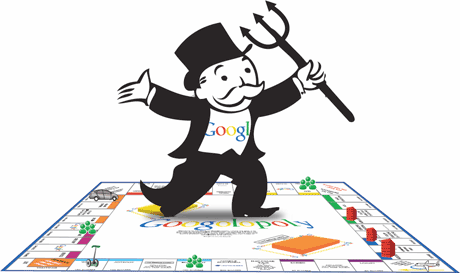
Like the regular one, the objective of this game is to acquire companies over the internet using google shares. Instead of Hotels and homes you can hire developers or buy new servers for the acquired companies.
And the good thing about this game is “its available for free as a PDF format”. All you have to do is to grab the PDF file, print it, find people and start playing the game.
To download the game in its entirety (including instructions, google shares, googleplex pieces, and more), visit here: http://www.box.net/shared/dguu2bfy88
Update : pls download this pic as the box.net link above is removed due to copyright violation. http://www.box.net/shared/static/vxel65zocw.png

Monday, July 07, 2008
Creating a video and don’t want to get sued over it?
With all of the lawsuits happening these days over copyright infringement and the such in online videos (such as the pending $1 B Viacom v. Google suit), people are wondering what they can do to help prevent getting in trouble themselves. Recently, the Center for Social Media (part of the School of Communication at American University) has concluded a long, in-depth project to establish a set of “Best Practices in Fair Use for Online Video“, and other valuable information to help guide video creators in ways to prevent getting themselves in trouble.
Thursday, May 29, 2008
Feeling Sick? Stay Home
Courtesy: shiftingcareers
Last week, one of my New York Times colleagues canceled a lunch meeting because he was sick and wanted to go home to rest. It was a Friday, and it was raining heavily outside. Even though I was looking forward to that meeting, I was delighted. His canceling meant that I didn’t have to leave my apartment. (I work from home.) And I also wouldn’t be at risk of catching his cold.
I don’t know why more people don’t do this. Instead, as winter moves along, many of us are surrounded by sick co-workers who show up in the office, at lunches and at meetings, determined (or so it seems) to infect the rest of us. This behavior is so prevalent that it now has an official name, “presenteeism,” and it costs companies a lot of money because it makes other people sick. The good news is that some companies have started to recognize the high cost of presenteeism and encourage sick employees to stay home and rest (or work from home if they are up to it).
I recognize that some employers may not be enlightened enough to embrace this way of thinking, and that some people don’t have enough sick days or feel secure enough in their jobs to stay home even when they are sick. But here are a few reasons why you should stay home if you can.
We all know that you can often accomplish more work in a few hours at home with no interruptions than in eight hours in the office. If you have the flexibility to work from home, then days when you are brewing a cold or dealing with a full-blown one are the ideal time to practice your telecommuting skills.
Since people are most contagious in the first two or three days of a cold, you will help your whole organization by not getting your colleagues sick.
Putting aside those who are legitimately fearful of losing their jobs, the people who show up while sick tend to be the ones so arrogant that they think work cannot go on without their presence. You don’t want to be one of those. (If this sounds like someone you know, you may want to print out this post and leave it anonymously where that person can find it.)
If you rest, you will probably get well faster. So by taking some time off, you will probably improve your overall productivity.
In these days of meeting overload, you will probably make someone very happy if your absence means that a meeting has to be canceled.
As for my colleague, we rescheduled our lunch for the following Friday. When I saw him, he said that his cold turned out to be not so bad after all. Perhaps he nipped it in the bud by going home early. Most important, he didn’t get me sick. My opinion of him (already pretty high) is ever so higher.
Sunday, April 20, 2008
They don’t know cricket, but know their business
Geoffrey Hampson doesn’t know much of the rules of cricket. But, as the CEO of the Vancouver-based Live Current Media group, he pulled off a major coup by upstaging many mainstream media companies and bagging a $50 million (Rs 200 crore) contract to host the IPL’s online content.
“I don’t understand the sport completely but I do have some good tutors,” the 50-year old Hampson said on a lighter note when asked how he got interested in his company's biggest ever single deal.
“I’m picking up the basics of the game and have some people of Indian descent in the company to help me understand the nuances,” he told the Hindustan Times in a phone interview. Until Thursday, the 22-employee company was unknown in India. It was quite a surprise when the IPL and the LCM announced they had inked a 10-year-deal on online content.
“I don’t understand the sport completely but I do have some good tutors,” the 50-year old Hampson said on a lighter note when asked how he got interested in his company's biggest ever single deal.
“I’m picking up the basics of the game and have some people of Indian descent in the company to help me understand the nuances,” he told the Hindustan Times in a phone interview. Until Thursday, the 22-employee company was unknown in India. It was quite a surprise when the IPL and the LCM announced they had inked a 10-year-deal on online content.
The LCM will manage and run two websites to generate revenue, IPLT20.com and BCCI.tv. The IPLT20.com was launched on Friday.
According to the LCM, now fans from around the world can have complete access to the 44-day long season. The site offers access to official league content including audio-visual content, photographs, live scoreboards and summaries, match results, Fantasy Cricket, player interviews, profiles, schedules, statistics, ticketing and fan interaction through polls, contests and newsletters.
As per the terms of the deal, LCM will make a guaranteed payment of $5m a year — $3m for the BCCI and a separate $2m for the IPL — for the online rights. After that, revenue will be shared between the partners based on advertising, sponsorship and merchandise sales through the two websites.
It will be a social networking site revolving around the cricket sport. It would also have a fantasy cricket application for Facebook. The video footage and pictures of the IPL fixtures will be for sale on the website, however no live streaming of games will be offered.
Hampson said that the big numbers of $5 million a year made business sense. “We are very confident of the commerce part of the deal.” He added that there was a tough bidding process involved in clinching the deal but LCM's ownership of cricket.com definitely played a positive role. The LCM thrives on its assets — some of the most sought after web addresses online. The company owns about 800 web addresses, of which 30 are premium names, including cricket.com, boxing.com, karate.com, brazil.com, indonesia.com, greatbritain.com, malaysia.com, vietnam.com, body.com, number.com, leisure.com, call.com, electronic.com and one of the largest e-commerce sites, called perfume.com, which alone generates $10 million revenue a year.
Hampson said that the LCM's major focus is “building destination hubs for passionate people. When we were expanding our horizons, the passion in India about cricket led us to the country. It was at a time IPL was shaping up. We approached them and the rest is history.”
This is the company's first foray into the Indian market and it hopes to bring the North American model of e-commerce — by which online shoppers pay a premium to buy memorabilia and autographed items through a licensed vendor, to India.
Interact with Microsoft Surface through AT&T
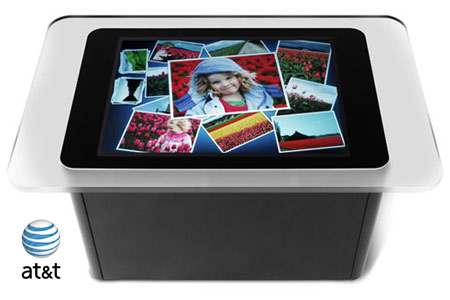 At AT&T’s Experience Store in San Bruno, the network operator has announced the availability of the latest outstanding innovation in the field of computing, called Microsoft Surface. Users can explore and interact with devices by using the sense of touch.
People in the United States are invited to interact with Microsoft surface in four different cities that includes Atlanta, San Antonio, San Francisco, and New York.
It includes a 30-inch screen embedded in an acrylic tabletop and has the ability to recognize and display the information of gadgets that are placed on the Surface. Mobile Phones, Camera and many other devices can be placed for multi-touch gestures recognition. To make it simple to understand, when you place a gadget on the place surface, it shows barcode-like tags to identify and present information about it.
With the included camera, the Surface has the capability to read gestures and also respond to different hand motions and movements like push/pull (dragging), zoom, rotate.
“We are thrilled to bring this groundbreaking new technology to our stores so we can introduce customers to their mobile worlds in a very personal and easy way. We look forward to working with Microsoft to continue developing new ways for our customers to learn about the ever-growing lineup of mobile devices and applications,” explained Ralph de la Vega, president and CEO of AT&T mobility.
Interestingly, it ensures multiple users, multiple simultaneous gestures along with different viewing angles utilizing a 360-degree UI and object sensing functionality.
AT&T is the first company to present Microsoft Surface in its stores. In AT&T stores, there are 22 devices installed.
Friday, April 11, 2008
Stop complaining, people! We live in a bounteous land ruled by brilliant intellectuals
New Delhi-based economist Ajay Shah has a fascinating column in India's Business Standard (via Bayesian Heresy) in which he makes the case that the current financial troubles in the U.S. may bring a recession, but can't really be called a crisis. I recommend reading the whole thing, but here are a couple of key passages:
In such difficult times, why is the US economy still rolling with the punches? Why has the US economy not collapsed in a mire of failed firms, finger-pointing by government agencies, morchas in the streets, and JPC inquiries? Understanding how this shock is being absorbed, and the equilibriating forces in play, is important in making a call on whether this is a crisis or a mere recession.
In the idealised world of securitisation, a parcel of home loans is converted into securities, which are then sold into the broad market. The ownership of these securities is dispersed amidst international hedge funds, pension funds, etc. The originator of the home loan is largely immune to the outcome : if a default takes place, the losses are borne by the owners of the securities.
Many critics of securitisation have pointed out that this theory has not quite panned out as expected. However, at the same time, there is no doubting the fact that securitisation has given a substantial dispersion of the $400 billion loss. For this reason, the impact of the massive loss on the US financial system is not as large as it might otherwise have been.
A JPC appears to be a Joint Parliamentary Committee, a morcha is a "public demonstration for conveying a protest or making a demand." I'd say we've already had the equivalent of a few JPC inquiries in the U.S., with many more yet to come. As for morchas, those are probably coming, too--although they'll remain pretty calm affairs unless the economy gets really bad.
The point about securitization is really interesting. As lots of smart folks have been saying lately, we've got an insolvency problem. But it may be dispersed so widely that relatively few financial institutions are in fact insolvent.
Then there's this gem from Shah:
Unlike many countries which have experienced crises, monetary policy in the US is manned by brilliant intellectuals like Ben Bernanke and Fred Mishkin. Few people in the world understand the interplay between monetary policy and financial sector difficulties as well as them.
Fed governor Mishkin goes by Rick, not Fred (his full name is Frederic). But whatever--he is really smart, and Bernanke (whom I don't know nearly as well) seems to be too. I'm generally hesitant to place all too much trust in smarts. But I guess it's better than putting trust in dumbs.
Sunday, April 06, 2008
China's population policy: Blessing or Nemesis
China, home to the world’s largest population has done a commendable job in reining its once alarming population crisis through concerted efforts to promote holistic family planning and enhancing the quality of health & education of its people. A two fold reduction in birth rate, a four fold reduction in natural growth rate, implementation of a 9 year compulsory education program leading to marked improvements in literacy, universal access to the public health ystem, emancipation of women on professional and social fronts, flexible schemes to support the retired and the aged together with enhanced awareness and international endorsement of the Population and Family planning program are some of the highlights of China’s untiring efforts towards solving the problem of population and development.
With the advent of the 21st century, China is gearing up to formalize a set of targets & principles and is charting a plan of action augmented by guarantee measures to sustain its positive drive to control population while improving the quality of life in general. Important targets include sustainable development to improve the economic conditions of people, setting goals to limit population and maternal / infant mortality rates, close coordination between the legal, educational, economic and administrative frameworks to help facilitate the better utilization of resources and thus result in anthropocentric form of development. The important steps to achieve the set targets include promoting family planning with emphasis on information, education and communication along with developing industries related to reproductive health, disseminating knowledge on child bearing and caring, better health education among farmers and women, continuation of the 9 year compulsory education program to expand to middle school and higher learning, raising the people’s ideological and moral standards, safeguarding children’ and women’s rights in the social, political and the cultural spheres, optimizing labor resources, steps to reduce poverty in the rural and urban areas, providing better facilities to the elderly and improving the ecological environment to alleviate human settlement. An improved legal system, better incentives to promote family planning, intense publicity and education, developing a robust scientific and technological backbone, better policies to improve money input and actively involving the non governmental and mass organizations are some of the guarantee measures planned.
While China’s population and development policy is all set to meet with stellar success given the disciplined approach that is being taken I would like to draw your attention to the mainstay of today’s Chinese economy. Cost effective manufacturing due to availability of cheap labor fulfilling the needs of the cost-conscious western world forms the back bone of China’s remarkable economic growth. The current population and development policy is bound to have a two pronged effect on the Chinese economy.
1. Firstly China is bound to face a noticeable shortage of manpower with the proportion of youth dropping consistently over the next 25 years vis-à-vis other countries like India. This may result in China faltering on its core-competency of “abundant” low-cost labor.
2. Secondly the reduction in population coupled with the marked improvements in the quality of people’s life will increase the bargaining power of its labor force which over time will no longer be willing to settle for the “low wages” it traditionally earned. This will lend another blow to the China’s ability to satiate the low-cost production aspirations of the world which is currently out-sourcing its manufacturing to China thereby weakening China’s strong position in the manufacturing domain. One can already notice such effects in the Indian BPO industry which offlate has come under a lot of pressure
due to cheaper alternatives mushrooming in the Philippines and Eastern Europe.
due to cheaper alternatives mushrooming in the Philippines and Eastern Europe.
3. This could further snowball into an all round increase in prices of manufactured goods the world over as the goods will no longer enjoy the benefits of cheap labor thereby negatively impact all the consumers.
While undoubtedly the efficacy of China’s population and development policy is well on track to achieve its desired objectives, only time will tell if it proves a blessing or a nemesis to the Chinese and the World economies in the long run.
Saturday, April 05, 2008
Airport: Skybus Airlines Shutting Down
Another News reflects slowing US Economy...
COLUMBUS, Ohio (AP) — Low-cost carrier Skybus Airlines is shutting down Saturday and plans to file for bankruptcy protection next week, becoming the latest of the nation's airlines to fall because of rising fuel costs and a slowing economy.
The financial situation of the airline, which announced the shutdown late Friday, has worsened in recent weeks, said Skybus spokesman Bob Tenenbaum.
"We deeply regret this decision, and the impact this will have on our employees and their families, our customers, our vendors and other partners, and the communities in which we have been operating," Michael Hodge, chief executive of Columbus-based Skybus, said in a statement.
"Skybus struggled to overcome the combination of rising jet fuel costs and a slowing economic environment," he said. "These two issues proved to be insurmountable for a new carrier."
The airline makes 74 daily flights to 15 U.S. cities, Tenenbaum said. It has about 450 employees.
Tenenbaum did not know how many passengers would be affected but said the company has flights scheduled through Sept. 2. All passengers affected by the shutdown are eligible for a full refund.
The airline said that all flights were to be completed Friday and that it plans to file Monday for Chapter 11 bankruptcy protection.
Skybus is pulling the plug less than two weeks after CEO Bill Diffenderffer resigned to pursue a book-writing career. He was succeeded by Hodge, the company's chief financial officer for the past year.
Skybus has endured some bumps since it began flying May 22, 2007. Over two days during Christmas week, the airline canceled as many as a quarter of its flights because of problems with two of its planes. Recently, it has been dropping flights and destinations because of high fuel costs.
The announcement adds to a string of bad news for airlines, which have been hurt by a slowing economy, high fuel prices and maintenance concerns.
ATA and Aloha Airlines both stopped flying this week after filing for bankruptcy protection. American, Southwest and Delta airlines have all had to cancel flights recently to address safety concerns about some of their aircraft.
On the Net: http://www.skybus.com/
Friday, April 04, 2008
Presenteeism - Going to Work Sick...
 Adam of Lifehacker, writes about Presenteeism, which is being in the office when you are sick.
' The problem with presenteeism: It’s making your coworkers sick and it may be costing your employer a lot of money. So why do people do it? … '
I’ve known of cases where the employee was admitted in the hospital, and all that the supervisor could think about when calling the employee was - “I heard you are sick. How long will you be? Or, do you think you can come for sometime and finish this work?”
Well, now what can one say to that?
Wednesday, April 02, 2008
April Fooled by Google and Virgin?

If you don't buy this joke, we'll kill this billionaire. Now, that's satire!
Now that Google has effectively conquered Earth, the all-powerful Web giant is setting its sites on a new frontier: Mars.
Calling it "The Adventure of Many Lifetimes," Google co-founders Larry Page and Sergey Brin just announced a joint venture with Virgin CEO Sir Richard Branson to colonize the Red Planet because, as the press release states, "Earth has issues, and it's time humanity got started on a Plan B."
Uhhhh, right. Happy April Fool's Day, folks.
There's nothing funnier than billion-dollar corporations taking time out of their busy multinational money-making days for a little light humor.
Here's what's been announced on the Google blog:
"For thousands of years, the human race has spread out across the Earth, scaling mountains and plying the oceans, planting crops and building highways, raising skyscrapers and atmospheric CO2 levels, and observing, with tremendous and unflagging enthusiasm, the Biblical injunction to be fruitful and multiply across our world's every last nook, cranny and subdivision ... So, starting in 2014, Virgin founder Richard Branson and Google co-founders Larry Page and Sergey Brin will be leading hundreds of users on one of the grandest adventures in human history: Project Virgle, the first permanent human colony on Mars."
Why Mars? Google representative Andrew Peterson cleverly dodged the question, explaining, "Because software engineering isn't rocket science, producing truly stellar products requires us to boldly innovate where no technology company has innovated before."
Ah, corporate branding still going strong in the midst of April 1st tomfoolery.
The blogosphere buzzed Tuesday morning with reactions ranging from amusement to confusion to irritation. Blame the economic turmoil, the Iraq war or the increasingly bitter presidential campaign for the less-than-warm reception: "I mean, hohoho, some of the richest men on Earth have done something to benefit humanity," one commenter writes. From another: "If this were real, China would beat us to it." Others scoffed that Google actually pays employees to produce these pranks. "A joke should have an element of humor. This one seems very sad. It's a shame they wouldn't contribute to something that monumental."
Hashem Bajwa, digital planning director at the San Francisco-based ad agency Goodby, Silverstein & Partners, itself part of a satirical moon-based ad campaign for Rolling Rock, notes the irony of this year's Google gag: "It's not a total disconnect from what Google does. So many people are asking, what will Google do next? If anyone would do it, it would be Google."
Google's brand is known for both its ambition and its quirkiness, and the company's logo "Do No Evil" seems to allude to the power it wields. In fact, Google has teamed up with the world's top astronomers to create "Google Sky," a new feature that allows anyone with a computer and Internet connection to "to browse and explore the universe" through the Hubble Space Telescope; Googlers will even be able to see the universe at x-ray or infrared wavelengths.
That one's not a joke. And if nothing else, it's a good jumping-off point for Mars.
Uhhhh, right. Happy April Fool's Day, folks.
There's nothing funnier than billion-dollar corporations taking time out of their busy multinational money-making days for a little light humor.
Here's what's been announced on the Google blog:
"For thousands of years, the human race has spread out across the Earth, scaling mountains and plying the oceans, planting crops and building highways, raising skyscrapers and atmospheric CO2 levels, and observing, with tremendous and unflagging enthusiasm, the Biblical injunction to be fruitful and multiply across our world's every last nook, cranny and subdivision ... So, starting in 2014, Virgin founder Richard Branson and Google co-founders Larry Page and Sergey Brin will be leading hundreds of users on one of the grandest adventures in human history: Project Virgle, the first permanent human colony on Mars."
Why Mars? Google representative Andrew Peterson cleverly dodged the question, explaining, "Because software engineering isn't rocket science, producing truly stellar products requires us to boldly innovate where no technology company has innovated before."
Ah, corporate branding still going strong in the midst of April 1st tomfoolery.
The blogosphere buzzed Tuesday morning with reactions ranging from amusement to confusion to irritation. Blame the economic turmoil, the Iraq war or the increasingly bitter presidential campaign for the less-than-warm reception: "I mean, hohoho, some of the richest men on Earth have done something to benefit humanity," one commenter writes. From another: "If this were real, China would beat us to it." Others scoffed that Google actually pays employees to produce these pranks. "A joke should have an element of humor. This one seems very sad. It's a shame they wouldn't contribute to something that monumental."
Hashem Bajwa, digital planning director at the San Francisco-based ad agency Goodby, Silverstein & Partners, itself part of a satirical moon-based ad campaign for Rolling Rock, notes the irony of this year's Google gag: "It's not a total disconnect from what Google does. So many people are asking, what will Google do next? If anyone would do it, it would be Google."
Google's brand is known for both its ambition and its quirkiness, and the company's logo "Do No Evil" seems to allude to the power it wields. In fact, Google has teamed up with the world's top astronomers to create "Google Sky," a new feature that allows anyone with a computer and Internet connection to "to browse and explore the universe" through the Hubble Space Telescope; Googlers will even be able to see the universe at x-ray or infrared wavelengths.
That one's not a joke. And if nothing else, it's a good jumping-off point for Mars.
Monday, March 31, 2008
How Google News was created ...
This is a story of how breakthrough new products can emerge from the most unlikely of places.
‘After September 11th, one of our researchers, Krishna Bharat would go to 10-15 news sites everyday looking for information about the case. And he thought, why don’t I write a program to do this? So Krishna, who’s an expert in artificial intelligence, used a web crawler to cluster articles. He later emailed it around the company. My office mate and I got it, and we were like, this isn’t just a cool idea for Krishna. We could add more sources and build this into a great product.
That’s how Google News came about.’
Marissa Mayer, VP of Search Products & User Experience (as quoted in Fast Company, March, Page 79).
I like this story for a number of reasons:
1. Breakthrough ideas, insights and products often come about by accident. This is not to say that many stage-gate, formal processes are not useful but their importance is over-rated. What is more important is to have creative, passionate people that are willing to try new things.
2. Creative organisations like Google (rated the world’s most innovative company) are places and spaces where not only great ideas are produced but there is a culture of idea receptivity. In my work with leaders I constantly stress the need to encourage idea production at the same time as idea openness. An open door policy does not always translate to an open mind policy.
3. Google also has a policy of encouraging its engineers to spend 20% of their time on working on things that interest them. The actual percentage is not important nor is how it is implemented of much more value is the notion that people work at their creative best when they are passionate about what they do.
What are you passionate about?
4. Creativity is also found at the most unexpected of places, people and times. The lesson? Don’t make any assumptions about who you should invite to a meeting for example. Have the experts mix with the newcomers and see what happens.
‘After September 11th, one of our researchers, Krishna Bharat would go to 10-15 news sites everyday looking for information about the case. And he thought, why don’t I write a program to do this? So Krishna, who’s an expert in artificial intelligence, used a web crawler to cluster articles. He later emailed it around the company. My office mate and I got it, and we were like, this isn’t just a cool idea for Krishna. We could add more sources and build this into a great product.
That’s how Google News came about.’
Marissa Mayer, VP of Search Products & User Experience (as quoted in Fast Company, March, Page 79).
I like this story for a number of reasons:
1. Breakthrough ideas, insights and products often come about by accident. This is not to say that many stage-gate, formal processes are not useful but their importance is over-rated. What is more important is to have creative, passionate people that are willing to try new things.
2. Creative organisations like Google (rated the world’s most innovative company) are places and spaces where not only great ideas are produced but there is a culture of idea receptivity. In my work with leaders I constantly stress the need to encourage idea production at the same time as idea openness. An open door policy does not always translate to an open mind policy.
3. Google also has a policy of encouraging its engineers to spend 20% of their time on working on things that interest them. The actual percentage is not important nor is how it is implemented of much more value is the notion that people work at their creative best when they are passionate about what they do.
What are you passionate about?
4. Creativity is also found at the most unexpected of places, people and times. The lesson? Don’t make any assumptions about who you should invite to a meeting for example. Have the experts mix with the newcomers and see what happens.
Microsoft's Bid for Yahoo Is All About Big-Budget Brand Advertising

From the rise in instant manufacturing to the growth of open-source business models, these trends show that innovation can bloom even in a grim economic climate.
Here's a look at nine trends driving business in 2008 — and a deeper explanation of the surprising secrets to Apple's success.
The search wars are over, and Google has won. Despite years of effort, Microsoft and Yahoo together account for just a third of US Internet searches and even less of the $8 billion market for search-related advertising. But the good news for all of Google's rivals is that online advertising is about much more than search. The new battleground is display — the kind of graphics-intensive spots that were left for dead after the Internet bust — and the emerging category of video. And the latest salvo in that war was Microsoft's $45 billion bid for Yahoo.
over, and Google has won. Despite years of effort, Microsoft and Yahoo together account for just a third of US Internet searches and even less of the $8 billion market for search-related advertising. But the good news for all of Google's rivals is that online advertising is about much more than search. The new battleground is display — the kind of graphics-intensive spots that were left for dead after the Internet bust — and the emerging category of video. And the latest salvo in that war was Microsoft's $45 billion bid for Yahoo. There are other reasons to buy Yahoo — its wealth of top-notch Web services, for example — but ultimately it comes down to advertising. Web advertising is in the midst of a metamorphosis. As television implodes, marketing chiefs are turning to the Net to create branding initiatives. They know you can't build a brand with little text ads that pop up next to search results. But you can with video and display, especially now that display has moved beyond static banner ads to include Flash animation and sound. Web advertising, which passed $20 billion last year in the US, is expected to surpass $60 billion in four years, and display and video ads will account for more than a third of the total. That means there's an opportunity to make money by dominating those categories the same way Google dominates the search market. "The race is on," says Mark Kingdon, CEO of digital ad agency Organic.
Google is already off and running. In February it rolled out AdSense for Video — an early attempt to bring video advertising to the thousands of sites it now delivers text ads to. What Yahoo brings to the table is numbers: It is the world's most popular Internet publisher, delivering Web pages to nearly 140 million people a month in the US alone. Yahoo also delivers ads to a vast network of independent sites, increasing its advertising reach to 85 percent of US Internet users, according to comScore. Microsoft reaches 56 percent of the US Internet population through MSN and Windows Live, but it still lacks credibility with Madison Avenue. Put it together with Yahoo, however, and you have a scale that even Google can't match.
Even if the Yahoo purchase goes through, a company like Microsoft needs more than reach. It also needs the technology to deliver the right ads to the right eyeballs at the right time and come back with a precise measurement of the results. But as Tim Hanlon of digital consultancy Denuo observes, "The best stuff is not coming from the leviathan players." One of the biggest advances in advertising technology, behavioral targeting, was pioneered by little firms like Tacoda (before it was bought by AOL) and the Drivepm unit of aQuantive (before it was bought by Microsoft). Behavioral targeting tracks surfers as they traverse the Web, making it feasible to deliver automobile ads, say, not just on auto-related homepages but on other sites visited by someone who's shown an interest in buying a car. That has opened up vast new quantities of inventory — Web pages that previously would have been a tough sell to advertisers but now make sense. "There's a lot more innovation to come," Hanlon says. The irony is that it probably won't be delivered by Yahoo, whether or not it's acquired by Microsoft. After all, this is a company that fumbled every opportunity in search. "It's a classic case," Hanlon adds. "Do two wrongs make a right?"
Wednesday, March 26, 2008
Vellore City The New Corporate City
Vellore City has 2 nd golden temple of india, largest hospital , 1 ranked private institute in india, historical famous fort where first war of indian independence took place, proposed airport will be open by 2009
want to know more abt the VELLORE CITY, check the links below: http://en.wikipedia.org/wiki/
http://www.vellorecity.com/
http://vellore.nic.in/
Posted by one of my friend, Balaji.D @ Clueless Romeo
want to know more abt the VELLORE CITY, check the links below: http://en.wikipedia.org/wiki/
http://www.vellorecity.com/
http://vellore.nic.in/
Posted by one of my friend, Balaji.D @ Clueless Romeo
Monday, February 11, 2008
Whatz Subprime crisis and Subprime pain: Who lost how much
The United States' subprime crisis has turned out to be bigger than previously thought and has the potential to drag the world's largest economy into a recession.
And although there are varying opinions on whether the US could slip into a recession or not, most economists do feel that despite the US Federal Reserve's rate cuts and the Bush administration's $161-billion economic aid plan, chances of a recession are high.
Be that as it may, one thing is for certain: the losses from the subprime that financial majors have incurred will take a long time to get over.
Given below, in the table, are the estimated losses that some of the world's largest banks have suffered on account of home loan defaults in the US. The total figure adds up to over $76 billion and does not take into account losses suffered by many other financial majors that had an exposure to the crisis.
Four Indian banks -- State Bank of India, ICICI Bank, Bank of Baroda, and Bank of India too have big exposure to credit derivatives, with the spreads on these widening since international lenders turned risk-averse following the crisis in the US subprime (or high-risk home loan) market.
Credit derivatives are instruments for which the underlying asset is a loan or a bond. Marking to market means valuing a portfolio based on the prevailing market price.
Subprime losses till date
Bank - Losses -
Citigroup - $18.0 billion
UBS - $13.5 billion
Morgan Stanley - $9.4 billion
Merrill Lynch - $8.0 billion
HSBC - $3.4 billion
Bear Stearns - $3.2 billion
Deutsche Bank - $3.2 billion
Bank of America - $3.0 billion
Barclays - $2.6 billion
Royal Bank of Scotland - $2.6 billion
UBS - $13.5 billion
Morgan Stanley - $9.4 billion
Merrill Lynch - $8.0 billion
HSBC - $3.4 billion
Bear Stearns - $3.2 billion
Deutsche Bank - $3.2 billion
Bank of America - $3.0 billion
Barclays - $2.6 billion
Royal Bank of Scotland - $2.6 billion
IKB - $2.6 billion
Societe Generale - $2.0 billion
Freddie Mac - $2.0 billion
Wachovia - $1.1 billion
Credit Suisse - $1.0 billion
Societe Generale - $2.0 billion
Freddie Mac - $2.0 billion
Wachovia - $1.1 billion
Credit Suisse - $1.0 billion
ICICI Bank has the highest exposure of $1.5 billion. SBI has an estimated exposure of $1 billion, BoI of $300 million, and BoB of $150 million. About 5-10 per cent of this figure could be the losses that these banks could incur.
Understanding the subprime crisis
Just what is the subprime crisis? And why is it having such a decisive impact on the Indian stock market?
Let's understand it. Take, for example, an American who seeks a home loan, but does not have a very good credit rating. That essentially means that banks may not extend him a home loan. Enter, another American with stellar credit rating and the willingness to take on some risk. Given his good credit rating, banks are willing to give him a loan at a certain rate of interest.
This individual the divides the loan into small lots and gives them out as home loans to lots of Americans, who do not have very good credit rating and cannot get a home loan from any bank. He gives out the home loan at a rate of interest higher than it is paying to the bank it borrowed money from.
This higher rate is referred to as the subprime rate and this home loan market is referred to as the subprime home loan market.
By giving out a home loan to lots of individuals, the individual ensures that even if a few of them default, his overall position is not affected much. But the individual giving out loans in the subprime market does not stop here. He does not wait for the principal and the interest on the subprime home loans to be repaid, so that he can repay his loan to the bank, which has given him the loan.
He goes ahead and securitizes these loans. Securitization involves converting these home loans into financial securities, which promise to pay a certain rate of interest.
These financial securities are then sold to big institutional investors. The interest and the principal that is repaid by the subprime borrowers through equated monthly installments is passed onto these institutional investors.
The individual giving out the subprime loans, takes the money that he gets from selling the financial securities and passes it on to the bank, he had taken the loan from, thereby repaying the loan.
A neat plan. But then things went horribly wrong. The subprime home loans were given out as floating rate home loans. So as interest rates increased, the rates on floating home loans too went up, and so did the monthly installments needed to service these loans.
These high installments hit the subprime borrowers with the terrible force. Many, given their poor credit rating to begin with, defaulted. Once, more and more subprime borrowers started defaulting, payments to the institutional investors who had bought the financial securities stopped, leading to huge losses.
So how did that effect stock markets in India? Institutional investors who had invested in securitized paper from the subprime home loan market, saw their investments turning into losses. Most big investors have a certain fixed proportion of their total investments invested in various parts of the world.
Once investments in the US turned bad, more money had to be invested in the US, to maintain that fixed proportion. In order to invest more money in the US, money had to come in from somewhere. And this money came in from emerging markets like India, where their investments have been doing well.
These big institutional investors, to make good of their losses on the subprime market, have been selling their investments in India and other emerging markets. Since the amount of selling in the market far overweighs the amount of buying, Indian stock prices have been falling.
Additional inputs: Business Standard
Subscribe to:
Posts (Atom)